John McMartin cattle drover
a true story about black cattle and a drover who fell foul of the law
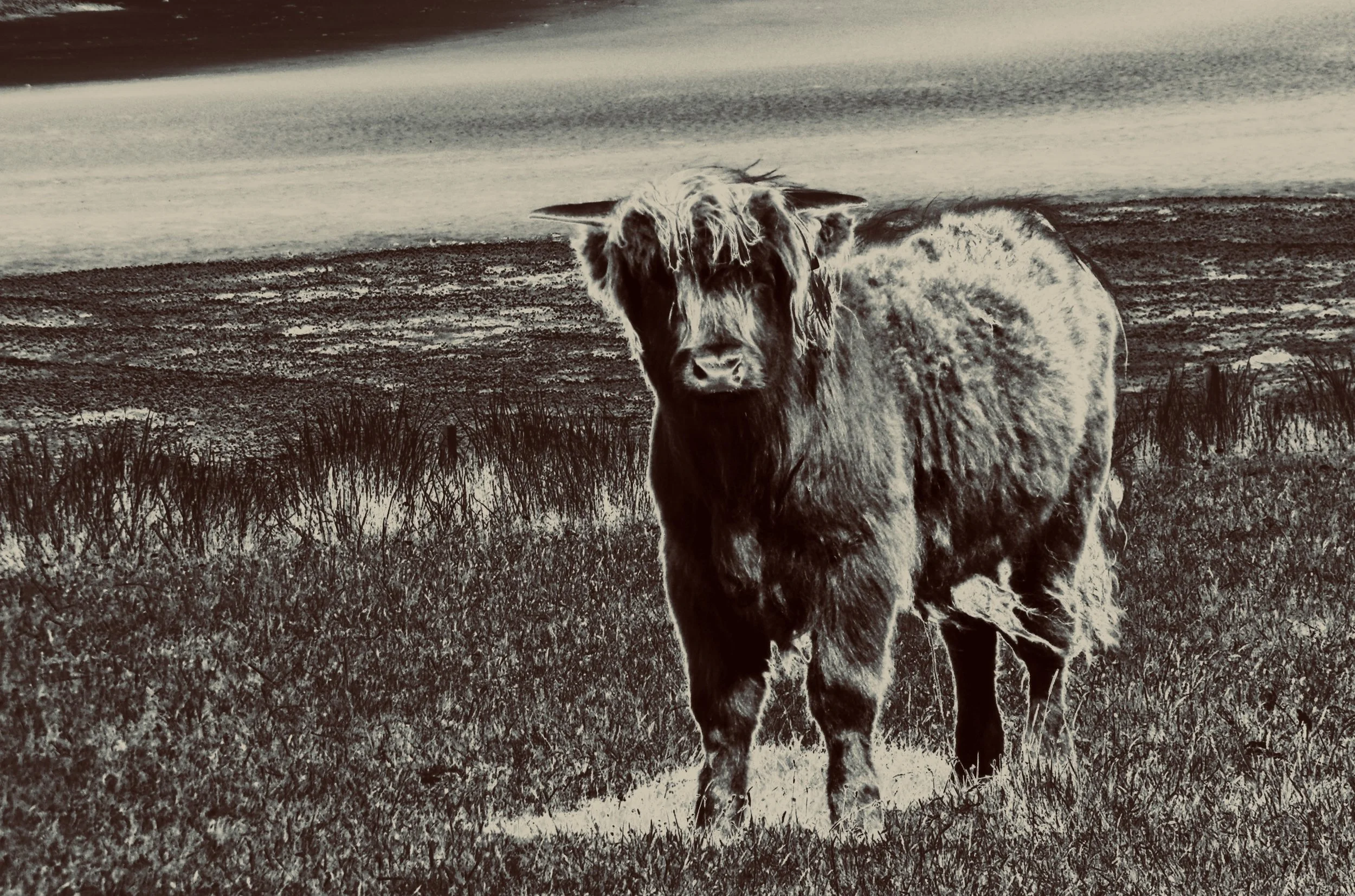
modern version of the small black cattle breed
This true tale centres round the early cattle Droving activities in Scotland and the fate of one particular Drover, John McMartin.
The early history of the droving in Scotland involves the gradual transition from lawless cattle driving to lawful cattle droving. The Union of the Crowns in 1603 seemed to be the main catalyst that moved the activity from lawlessness to legitimate trading and movement of livestock. A century later, in 1707, the Union of Parliaments further cemented that it into the Scottish economy.
To facilitate the trading of these beasts, they had to be driven, on foot, from all quarters of the country, mostly the north, to the markets of the midlands and further south of Scotland, such as Perth, Crieff, Stirling and, arguably most famous of all, The Tryst, near Falkirk. Bringing beasts to the mainland from the Outer Islands for example, brought uncertainty, both in terms of ferry costs and reliability. Feeding costs in the remoter hill country tended to be little, however once into the lowland districts and near these main markets, landowners demanded payment for nightly grazing.
There were no railways or other mechanised transport then, so every mile was covered on foot. Some drovers did use small ponies.
Cattle droving was hard work and drovers had to stay with their cattle and often would sleep out in the open, wrapped in a plaid. There were bogs to be avoided; rivers which were quick to rise had to forded; the feet of the cattle to be attended to; and resting places with pasture and water to be found – essential if the beasts were to reach the market in good condition. Rough shelters for the Drovers came into being at these stances; the most useful of them later became simple booths where accommodation and food were to be had. The staple diet of the drover would be some kind of gruel. Typically barley or oats, boiled in water or maybe milk. One assumes there was some kind whisky involved. Potatoes provided a good broth which could be augmented with any game or vegetables to be got along the way, or even the odd fresh trout from the burn.
In 1663 it is recorded that 18,000 cattle moved out of Scotland to Carlisle, and from there to markets in England. In the 1680s, when more regular figures became available, exports to England had risen to as many as 27,000 cattle annually. Incidentally, sheep were another profitable export and numbers in the region of 32,000 a year were recorded.
In the early part of the 18th century it was thought a drover could earn around one shilling a day, By the first quarter of the 19th century that had risen to three to four shillings a day. Travelling back home after the sales was at the drover’s own expense.
Maps of Scotland from these days will be cross crossed by droving routes.
The cattle referred to above were called, Black Cattle.
Before moving into drover John McMartin’s story , let me explain a bit about ‘Black Cattle’.
The term 'cattle' and its origins is quite interesting in itself.
From mid 13th century, the early days of crofting and farming in Scotland, all livestock, whether a goat, pig, sheep or 'bovine' were called chattels, meaning movable possessions. A word used to this day, mostly in legal documents, where the phrase, goods and chattels is quite common.
Catel, from Anglo French means property. In Old French the word is, Chatel. Late Latin, a form of Latin used in the Roman Empire, used 'capitale', to mean property. Finally, the Old North French word for property was 'cattle'.
With all livestock being called cattle and the bovine becoming the most expensive and increasingly the most financially important of a crofters moveable property, certainly in Scotland, the need to label that possession differently from the others became important. So, the predominant colour became the identifier and the bovine became black property, or ‘Black Cattle’.
Some experts suggest that the Black Cattle breed are direct descendants of the old Celtic oxen and perhaps even have Norse connections, by way of our early Viking visitors. These 'Celtic' beasts were a lot smaller than most of today's breeds, about two hundred and fifty kilograms. For the more mature reader, that is about five hundredweight.
They were a hardy beast and as referenced above, able to walk for days and weeks through the Scottish Highlands to the markets in the south. Many would then have to move even further south into England. At that time, it is claimed, England saw Scotland as their grazing field. That lasted for many years.
However from the early nineteenth century the popularity of Black Cattle waned as developments in this field saw the emergence of many more profitable and larger breeds. With selective breeding, the ‘Black Cattle’ morphed into what we now call, The Highland Cow.
So next time you stop to gaze at, and snatch a photograph of that iconic tourist favourite of Scotland, the Heiland Coo, be amazed, because you are looking at the descendants of Black Cattle, with ancestry links through hundreds of years of Scottish history, right back to Celtic and Viking times.
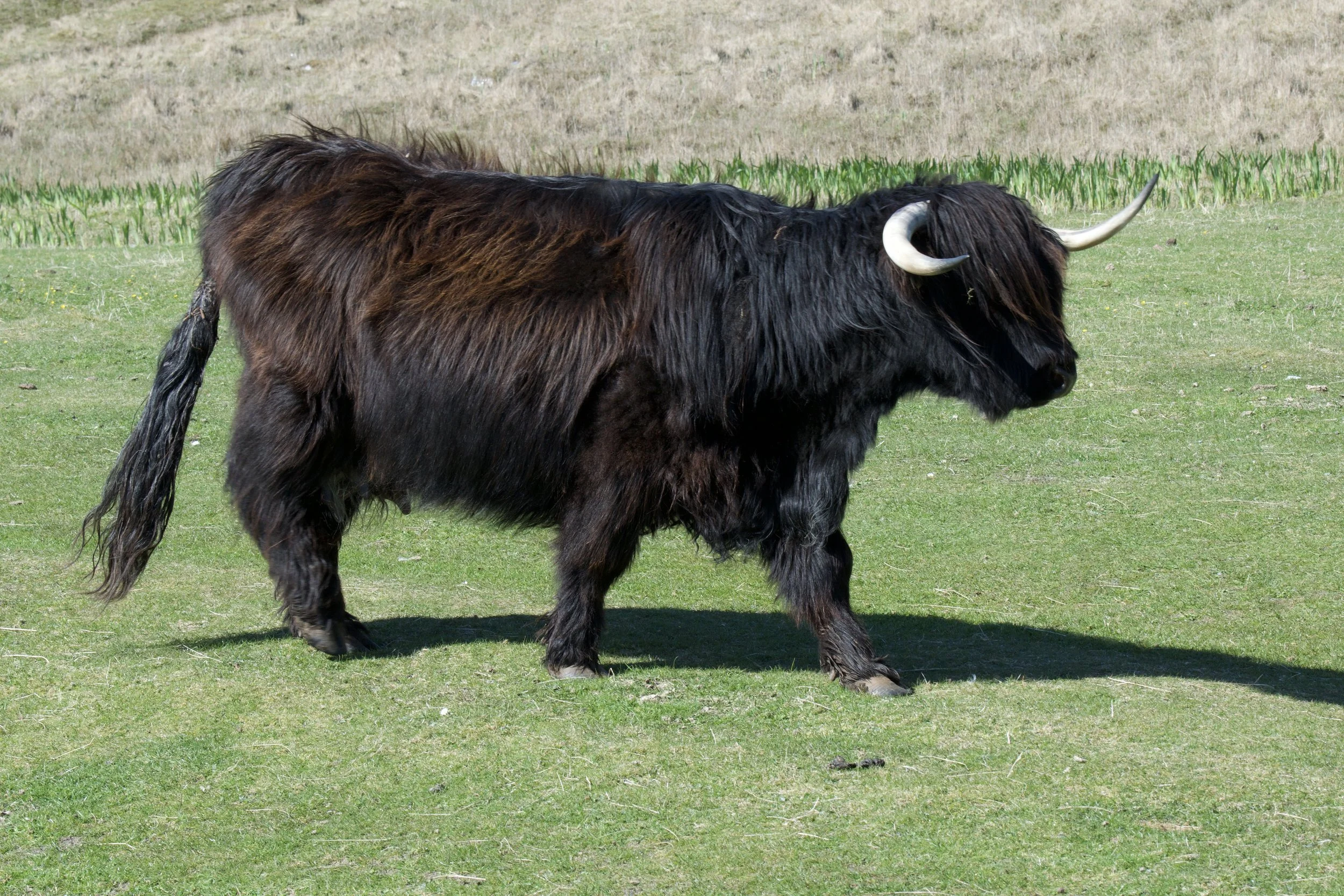
The modern Highland Cow
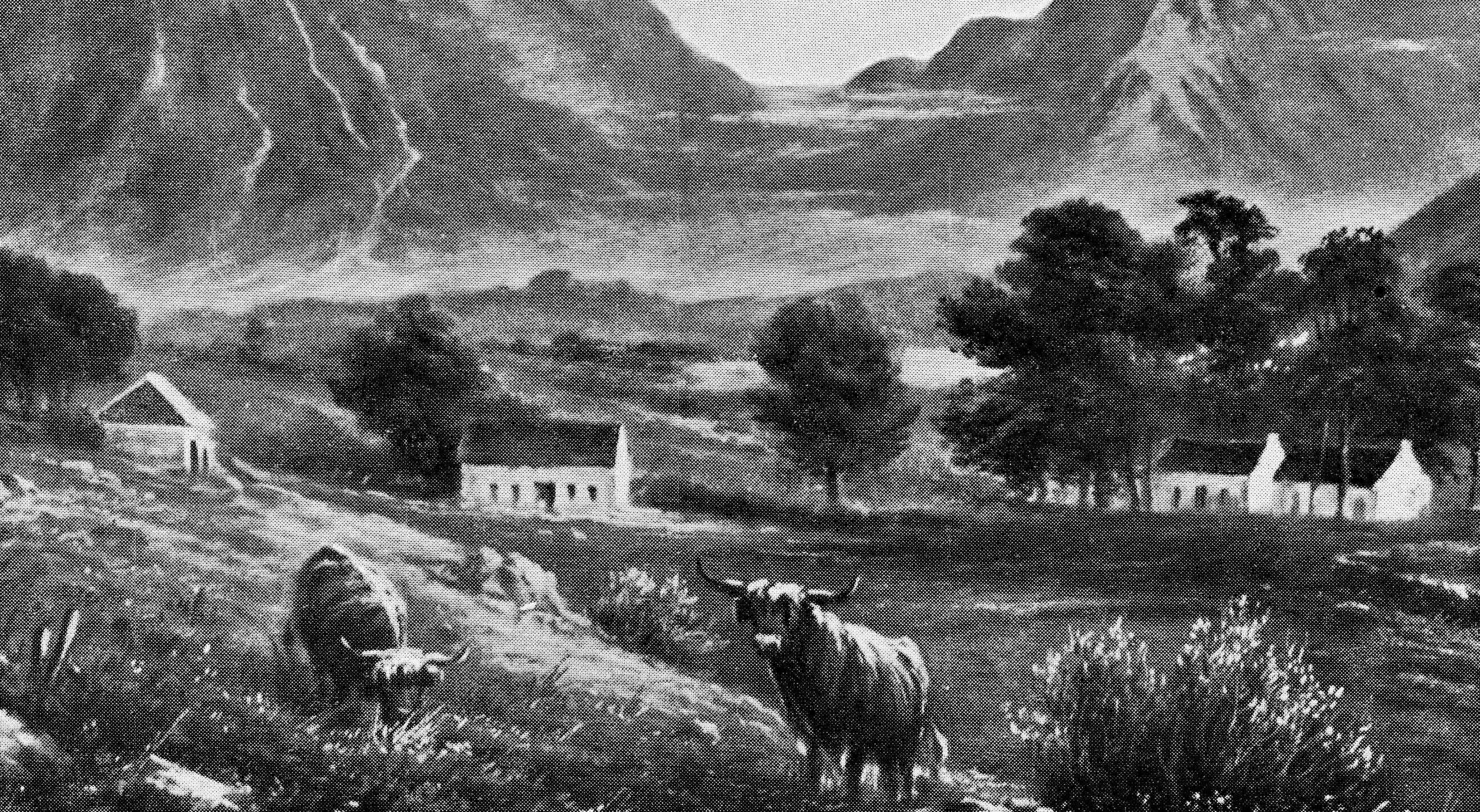
Black Cattle passing through a mountain pass.
John McMartin
The disorderly conduct of some of the Highlanders was long remembered in the cattle trading markets. Mr Laurie, the School-master of Monzie, who wrote the Statistical Account of that Parish, said that they, the Drovers, were ‘described as barefooted, and bareheaded, many of them old men. Being numerous, they used to enter the houses of the country people, take unceremonious possession of their firesides and beds, carry off the potatoes from their fields and gardens, and sometimes even the blankets which had afforded them a temporary covering for the night.’
John McMartin from the Loch Lochy area of the Great Glen in Lochaber in the Scottish Highlands was such a cattle drover. His business as a drover involved moving Black Cattle to and from cattle fairs and markets throughout the country.
Sometime in 1752 he was involved in driving a herd of Black Cattle from a place called Gallachie, some fifty miles or so beyond Inverness, to the market at Stirling. Gallachie may have been the name of an estate rather than a town or village. One assumes that drive would have taken a few weeks. When he eventually arrived in Stirling it seems he had a successful sale.
Instead of heading straight home however, he tarried at the Fair for long enough to relax and imbibe, perhaps a tad more than he should have. Mind you, successfully driving cattle all that way is a hard shift and a thirst develops. John's drinking that night in Stirling, markedly changed his life.
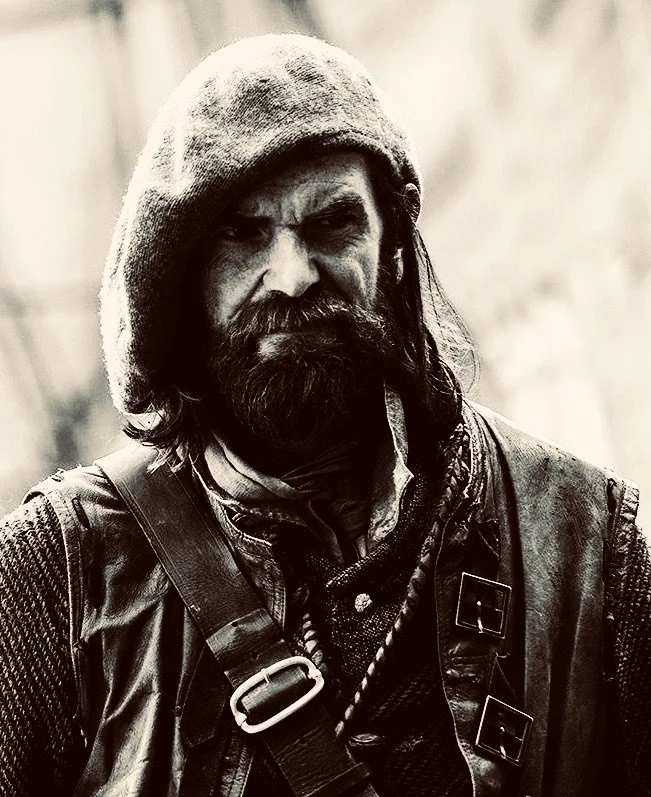
A drover (not John McMartin)- image borrowed from Crieff and Strathearn Museum.
Whilst buying items from a peddler it seems he stole other items, amongst which were some tartan plaids. An interesting local connection is that the nearby town of Bannockburn had tartan mills, suggesting that is where the plaids were made. Wherever they came from, what is not in doubt is that John McMartin was arrested and incarcerated in the nearby Toolboth to await trial.
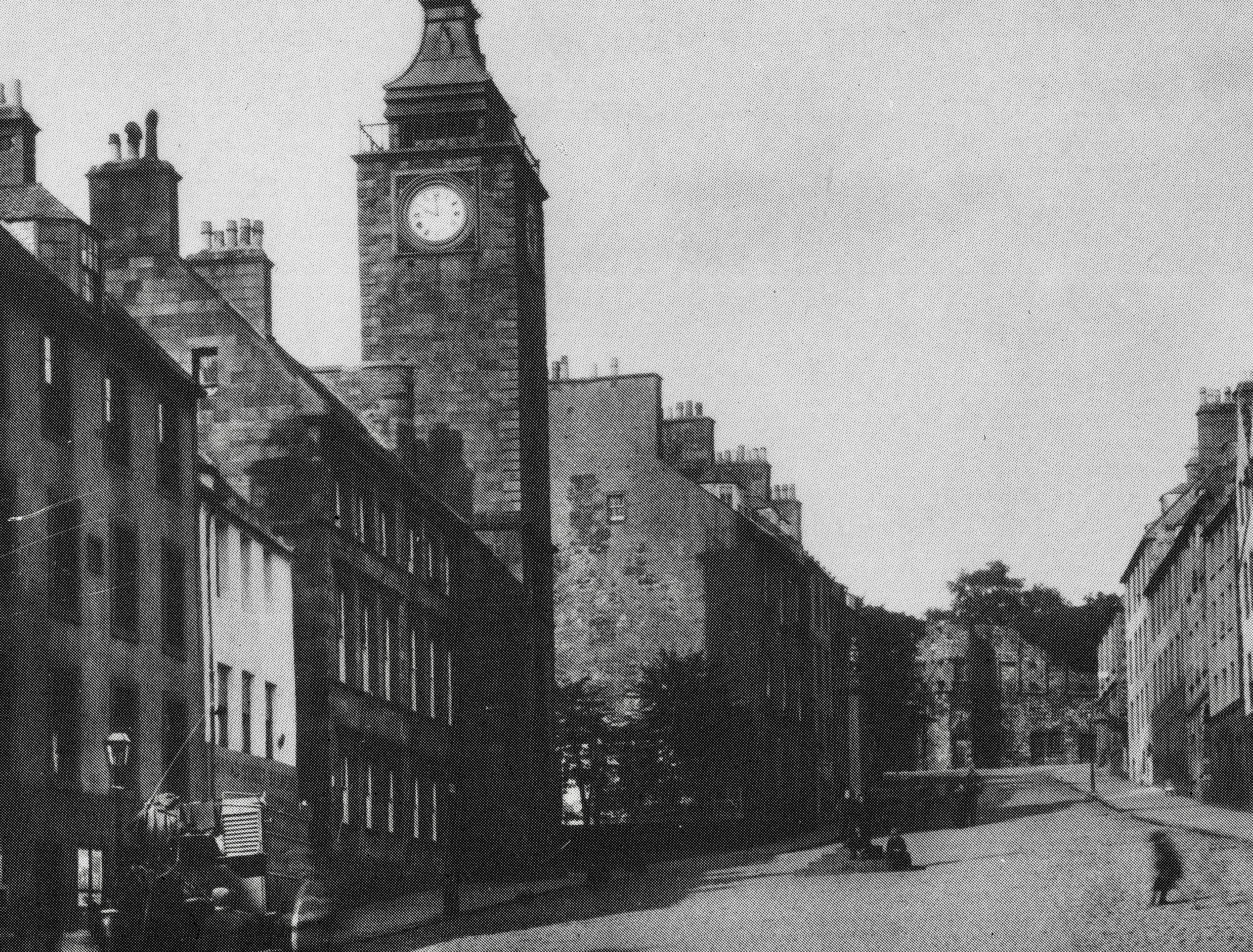
Tollbooth, Stirling, and the town gaol is the building on left with the clock tower. Image part of the Francis Frith collection.
When his case was heard a few weeks later, in order to avoid a trial, he freely admitted his wrongdoings and voluntarily banished himself from Scotland. The phrase he used was, 'in all time coming during my lifetime.' He was represented in court by a Burgess from Glasgow, who on John's behalf had already organised transportation to His Majesty's Plantations in America. It is thought John McMartin was of the opinion that by arranging his own life long transportation, he would be spared a worse fate at the hands of the town Magistrates.
As far as is known, John McMartin never returned to his home in Lochaber and never saw his family again.
It would be nice to think the story had a twist in the tail and that perhaps he did manage to ‘sneak’ back to his home in Lochaber, or did he arranged for his family to join him in America and become part of the McMartin clan in the USA?
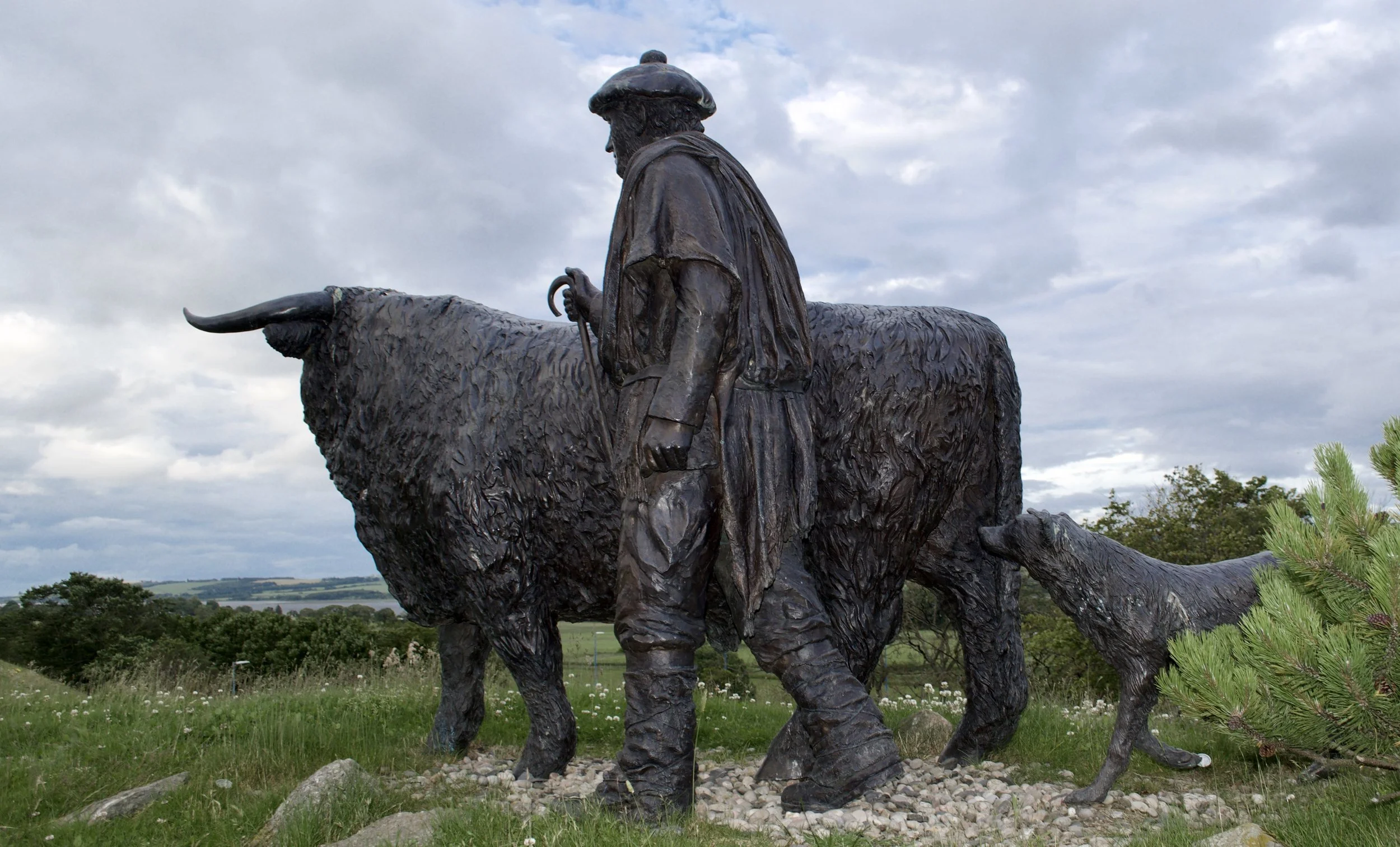
Drover with his dog and black bull -statue at entrance of Dingwall livestock market.