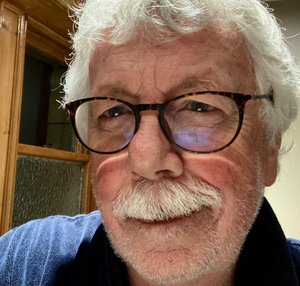
The Millhall Ghost
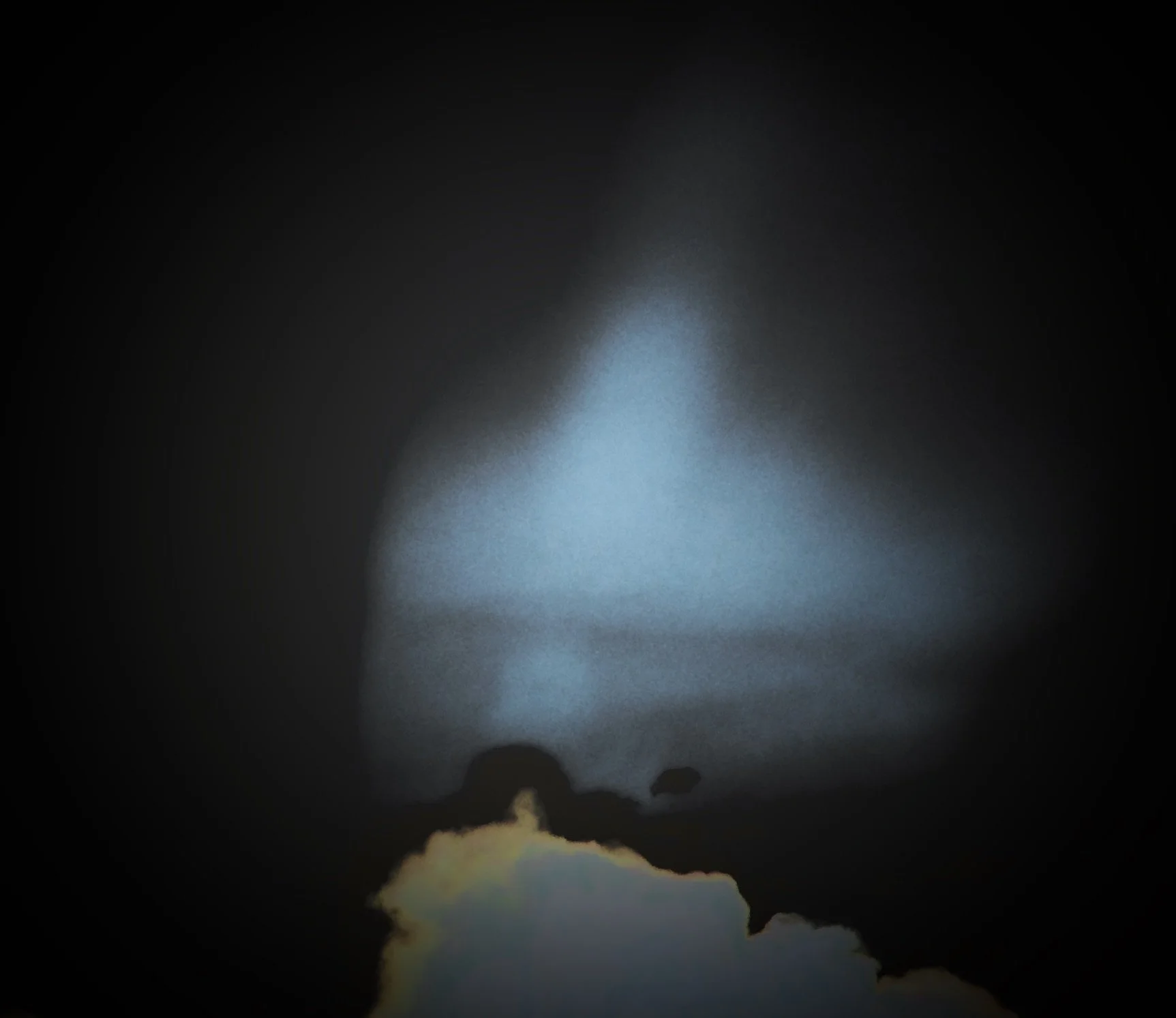
Ghostly figure. My own collection.
Halloween, it is believed, has connections to the Celts of Ireland and in particular the festival of Samhain.
In these days, October 31st was believed to mark the end of the year. Next day, November 1st, the start of winter, was when the new year was believed to begin. It marked the time when livestock was brought in from the pastures to shelter from the winter storms.
In these times, the onset of the winter period, was important for another reason. It was believed that the eve of Samhain, marked an important and spooky threshold in their calendar. It was then that the worlds of the living and the dead blurred, allowing spirits, fairies, and ancestors to roam freely in our world. The souls of the long dead returning to their homes, while those who has ‘passed’ during that year travelling off to the other side.
Halloween has particularly deep roots in Scotland, where I hale from, and many of the traditions we associate with the festival today can be traced back to that ancient Gaelic celebration of Samhain.
As Christianity spread across Scotland, Samhain became linked with the Scots, All Hallows' Eve, the night before All Saints’ Day. Over time, the name evolved into ‘Halloween’.
As the centuries rolled on it transformed from a pagan tradition into the various celebrations that exist today, with different countries developing their own themes.
In the United States, such celebrations involve, costumes, parties, jack-o'-lanterns and ‘trick-or-treating’ .
My own country, Scotland developed along different lines, with things like, ‘dookin’ for apples, ‘neep’ lanterns and ‘guising’ to name just three.
I should explain;
Dooking for Apples.
Some theorise that Apple Dooking’, has its connections in the ancient world of witchcraft and relates to the barbaric test as to whether a person was a witch or not. The test was to plunge that person under water, ‘ducking‘. If they survived, did not drown, that was proof they were, in fact, a witch. If however they actually drowned, that was a sign of their innocence. Other however claim connections to worshipping Pamona, the Roman goddess of fruit trees and orchards.
Who knows? One thing I do know is that in my youth it was a firm favourite at Halloween parties.
Without using hands, players have to grab an apple floating in a basin of water. Tactics include spearing apples with a fork held between the teeth or, for those who did not mind splashing about and getting wet, trying to actually grab an apple with their teeth. I am aware that some take the lazy way out and drop a fork from their teeth into the bucket, in the vain hope of spearing the fruit. A tactic forbidden in my household.
Neep Lanterns.
Root crops, such as turnips, grow well in Scotland thanks to our cool, damp climate. Being roughly the size and shape of a human head, turnips were traditionally hollowed out and the outer skin carved into a scary face. Lit from the inside, these ghostly lanterns – also known as ‘tumshie lanterns’ – were believed to ward off malevolent spirits.
In North America, the ‘Jack O’ Lantern’ is carved from a pumpkin, which are considerably easier to carve.
Guising
This last of my Scottish examples is perhaps the most famous of Halloween traditions. The origins of guising lie in dressing up children to disguise them from the returning spirits, or ghosts, of the dead who might be angry at someone who had wronged them in their past and were now seeking revenge. Disguised children could wander among the spirits of the dead visiting the feasting houses on Halloween, where they would receive an offering of nuts or fruit to ward off evil.
Halloween guising in Scotland is still a common practice and consists of kids dressing up, going round their neighbourhood, knocking on house doors and when opened, greeting the householder with the phrase, ‘please help the guisers’, followed by a song or perhaps a few jokes. They often are invited inside, sometimes not. Their reward nowadays will be sweets and money.
In my day it was often a handful of nuts and a small orange.
Sad to relate, in my opinion, our Scottish Halloween, or Guising night, has slowly, due to the steady drip drip of American television and film, diminished to be replaced by; trick or treat; and pumpkins.
What has not been diminished however is our appetite for ‘ghost’ stories and tales of the ‘unknown’.
As Halloween approaches let me leave you with such a ghost story from the area in Scotland near where the Battle of Bannockburn took place in 1314.
I give you The Millhall Ghost.
If your meanders ever take you to that area to the east of Stirling, near the confluence of the Pelstream and the Bannock burns, in the gloaming of the day, when the mists are rolling in from the River Forth, ‘look about ye’.
You are in the territory of the Millhall Ghost.
As you advance through the area, head high, spying out your route, you may never spot this ghost. You will however, trust me, be spotted.
Your first hint will be a kind of unnerving, ’someone is watching me’ feeling.
There will be no sound to alert you; no wailing, no ghostly noises, not even a paranormal aroma, no cigar smell, no stench of rotten fruit or even perfume, no this ghost utters no sound nor does he or she emit any odour.
If you are brave enough, a quick, nervous, look behind may reveal all.
The Millhall Ghost, will be walking slowly a few paces behind. Not trying to catch up, just eerily keeping pace. A ghostly, whitish grey, creature. It is difficult to make out a particular shape, although some have claimed it to take human form, with long grey hair, thigh length boots, and what looks like a long coat or cloak topped by some kind of headwear that nobody can describe.
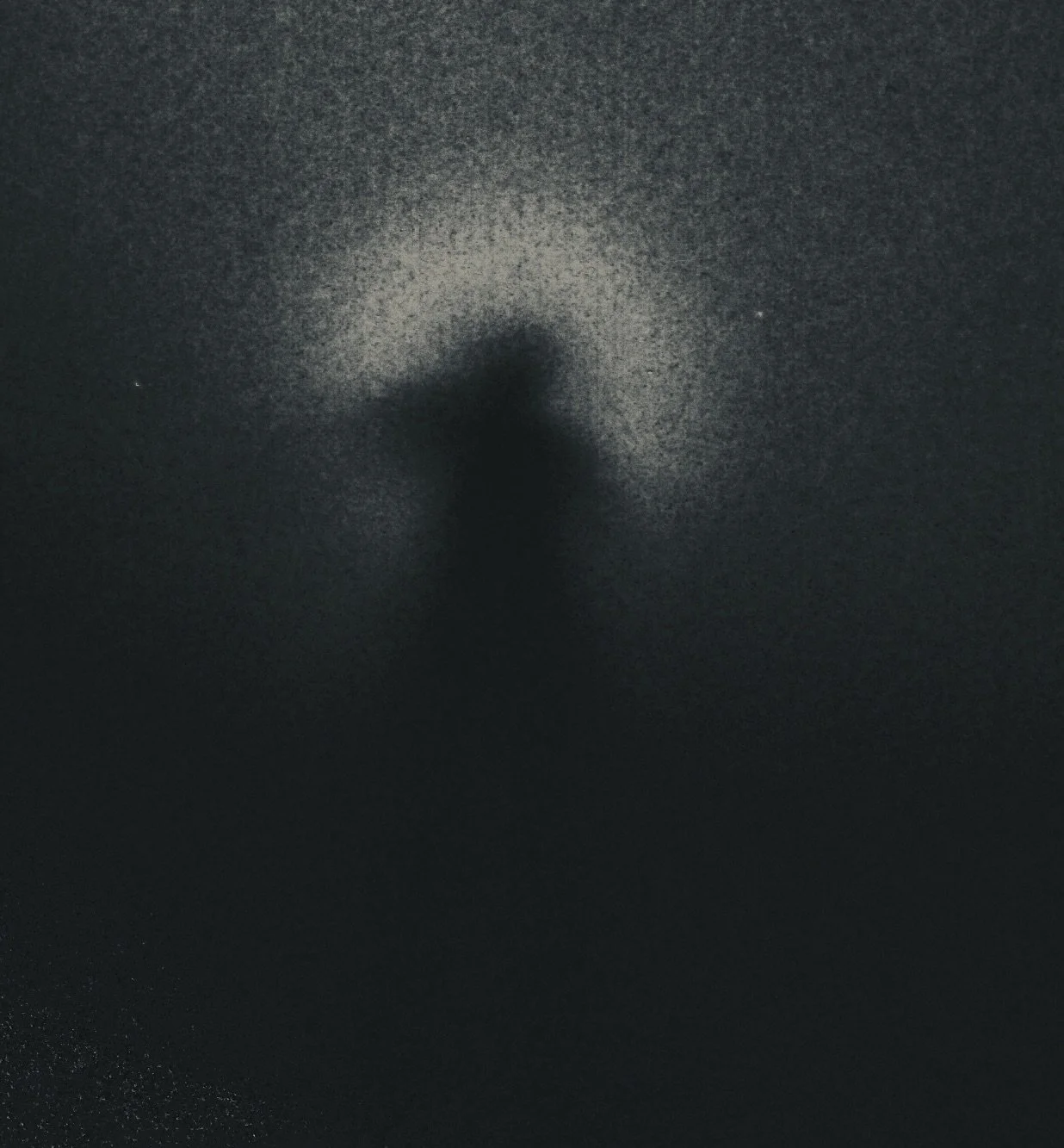
A quick glance.
What is clear. Those who claim to have been so brave and have seen the ghost long enough to be able to offer a description, have all done so from the locked ward of the hospital they will never leave.
For the rest of us, something even more eery, scary;
If you get that feeling of being followed and pluck up the courage to glance over your shoulder, a strange thing will happen. Just at the very instant you are turning your head, your attention will be distracted for an instant, it is always thus and you will look away.
Then when you finally, nervously, look back over your shoulder, you will be alone.
You will not be able to describe what took your attention, nobody outside that locked ward ever has.
So what or who, is the Millhall Ghost?
Some say the ghost of a local salmon poacher who drowned a century before and is now wandering the misty nights looking for his loved ones?
Others suggest the lost soul of an ancient coal miner.
One person who experienced the eery encounter was convinced she heard a horse whinnying. She is unequivocal in her belief that our ghost is a horseman from King Edward’s army, searching for his lost steed after the Battle of Bannockburn.
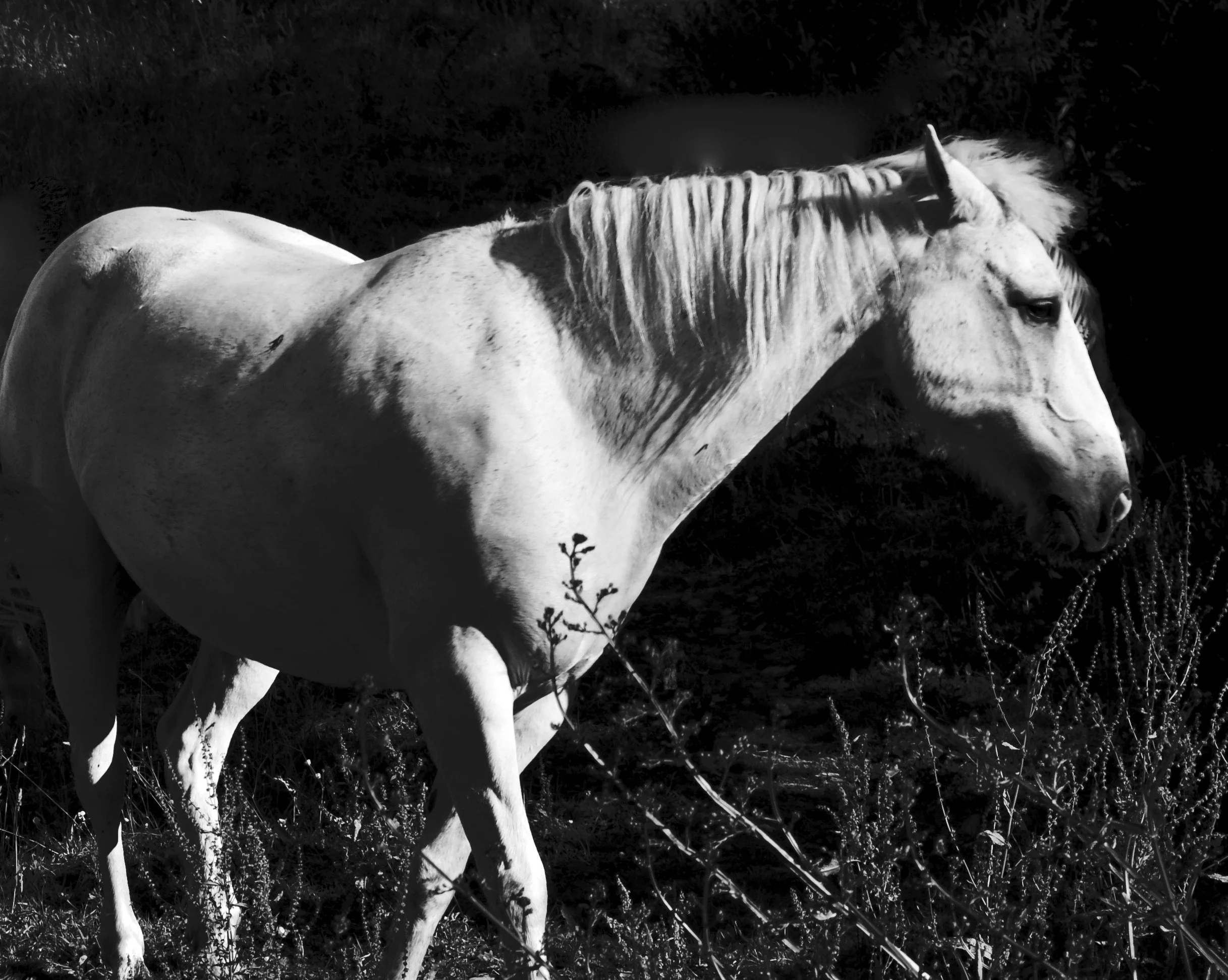
ghost of lost steed
So whoever or whatever the bodach is and whatever his or her, or its purpose, one piece of advice, if you ever find yourself in this area at the gloaming time, particularly when the mists roll over from the River Forth, and you are overcome by a, ’someone is watching me’ feeling;
Step forward and whatever else you do;
Do not look behind you.