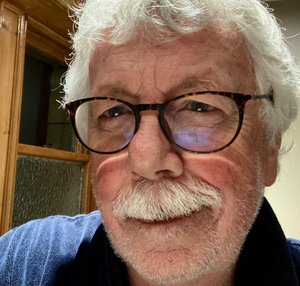
What follows is a small snippet from the book, ‘The Fearn Bobby’. A book I wrote to tell my own story of thirty years in Scottish Policing.
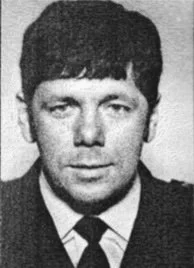
The start - 23 March 1974
It is march 2004. I had tendered my resignation, and it was accepted. I never went back into the building. To be honest, I could not, it was sore, raw. The seven weeks soon passed, and thirty years to the day I turned up at Dingwall police office wondering what the future was to hold for me, it really was over, and I felt the loss.
I think part of that loss was that my own officers did not think I was worthy of a farewell.
I had lived and worked through a particular phase of the Scottish Police Service. I had posed a question at the beginning, if only to myself, about whether I was joining a Service or a Force. I was clear it was a Service. I am not so clear now.
It is undoubtedly the case that any officer through all police history, could claim to have lived through a particular phase and witnessed change, I am not so sure however if it would have been quite so dramatic as the latter part of the twentieth century.
The significant change I worked through and in some small way, helped bring about, was a definite move to partnership working and involving communities. I say that in the knowledge, that like most change, it was not taken seriously by many and resisted by some. However, like King Cnut discovered, the turning tide was relentlessly moving, and change was unstoppable. The partnerships grew and we saw, among others, the emergence of joint police, social work, child protection and investigation teams; racist attacks and harassment joint strategies ; drug and alcohol partnerships and more. Yes, the face of the service has changed dramatically over the years of my service and it was good to be part of that.
In terms of my own understanding of my service. I have no regrets, I loved every bit of it, from working on my own in the single officer beat of Fearn in Ross shire through the hard shifts in Tullibody, to running my own command and all the other bits. I worked with so many decent honest men and women, who would do anything for you, including risk their life.
In my book you will detect a fair amount of what some of my senior officers called ‘belligerence’ on my part. In fact, on reading it you may agree. I will be disappointed if that is your judgement however. In every case recounted in the book, I have supported my stance with reasoning and evidence. I can offer no more.
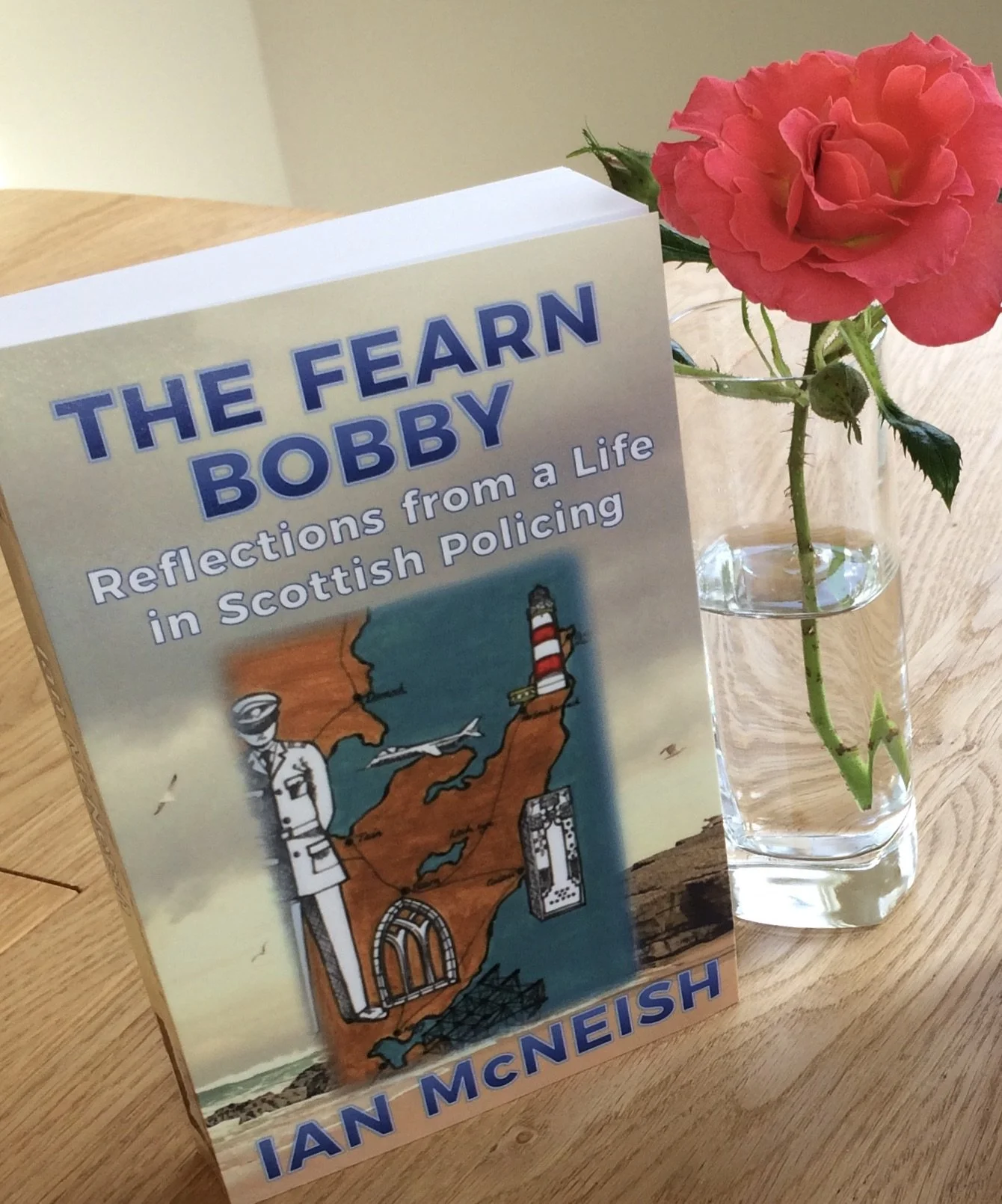
The Fearn Bobby
There were a few instances when I was bullied. Let me put that into some perspective. The bullying was a minuscule, hardly measurable, part of my thirty years of service. In terms of belligerence, I dispute that. I prefer the heading rational. Mind you I suspect some may use, ’Contrary’. Belligerence implies aggressive behaviour. I was not aggressive, I could be, on occasion, challenging.
If I can quote Dr Israel Shahak , 'Only an open conflict of ideas and principles can produce any clarity. Conflict may be painful, but the painless solution does not exist, in any case the pursuit of it leads to the painful outcome of mindlessness and pointlessness, the apotheosis of the ostrich.'
I am clear in my own mind that there are situations when it not only reasonable to ask the why question, it is imperative.
One may then suggest if I were contrary, then perhaps I was a ‘Dissident’. I reject that on the grounds that such a title has to be earned and comes with an element of risk. Was I a ‘Maverick’, or perhaps ‘Radical’ or was I in fact ‘Contrary’? Perhaps in some ways, I was all of them.
However, I will stick with ‘Rationalist’. To me that implies reasoned counter argument and whilst conducted within the civilised realm of a police service, it did come with a level of risk, if not to the person, certainly to one's career prospects. It was sometimes a lonely and a hard road. I will finish my discourse on my personality within the police service with these words from Christopher Hitchens;
'For the dissenter, the sceptical mentality is at least as important as any armour of principle.'
The titles ‘Contrarian’ or ‘Dissident’, pale into insignificance when one considers the question I posed myself at the start of my book.
‘Was I a fit and proper person to hold a dying young man?’ Because, if I was not, it was all for nothing.
My dad had been correct all along. I was not hard enough. To be really hard, one must have no conscience, one must not care. I had both, that made me vulnerable within the service, it is the Achilles heel of all honourable folk.
That is what he meant; he knew me, and I had misunderstood him all these years.
My mum and dad died in 1973 and 1974 respectively .
They were not to witness to my police career.
I suspect they might have felt a wee bit of pride to see my book on a bookshelf, amongst the books of real authors.
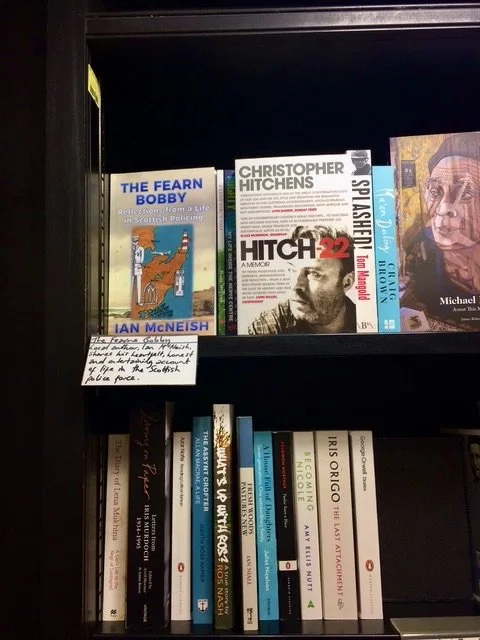
On the shelf of of a mainline bookshop in Scotland