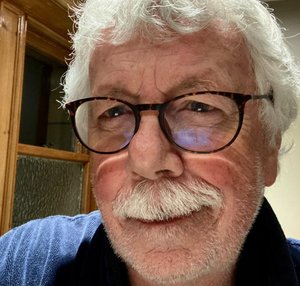
kipper breakfast
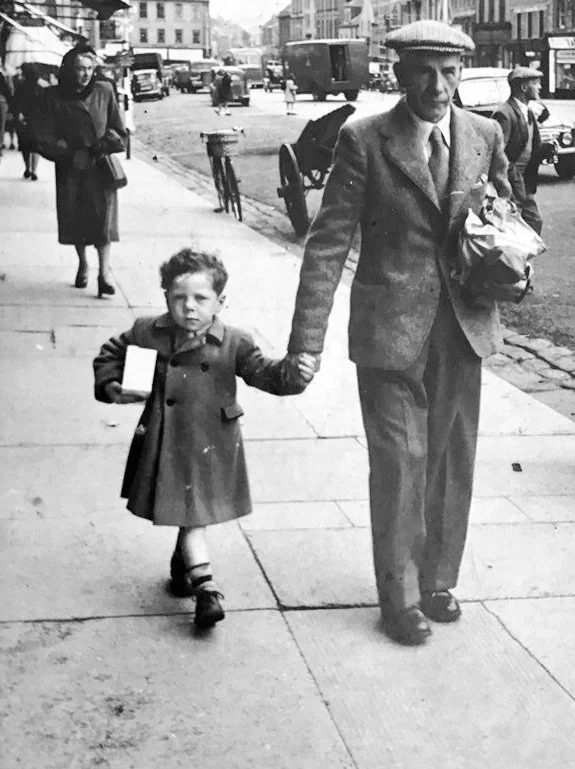
Grandad O’Hara and Ian in Montrose, circa 1950.
My name is Ian McNeish, although a look in my birth certificate will show, John McNeish. I am not John McNeish. When my dad registered my birth he was not allowed to put Ian on the certificate. The Registrar said the Gaelic ‘Ian’ was not allowed and the English equivalent, ‘John’ had to be used. Despite my dad's protest, ‘John’ it had to be. So I was less than one month old and I had been subjected to a racist act at the hands of the state.
I was born in Falkirk in 1946, into a world of Identification Cards, food rationing, and a language quite different in many ways from the language of today; Turf Accountants, The Store, Oddfellows and other quaint expressions that are now largely forgotten. We kept blankets in a cist. There was an explosion of births in the years immediately after the war. Squaddies, getting back to normal, after years of being away from home. My mum was often heard to remark that some babies were born with bruising on their wrist; caused by hanging on till after the wedding.
In the USA they referred to the post war increase in births as 'baby boomers'. In Britain these post war births were called, 'bulge babies', not 'baby boomers'. Over the years our language has been eclipsed by foreign terms, particularly American terms. Hence 'baby boomers' is now common usage by our 'informed' media and others. Our own, perfectly acceptable term, 'bulge babies' has been destined to the language dustbin.
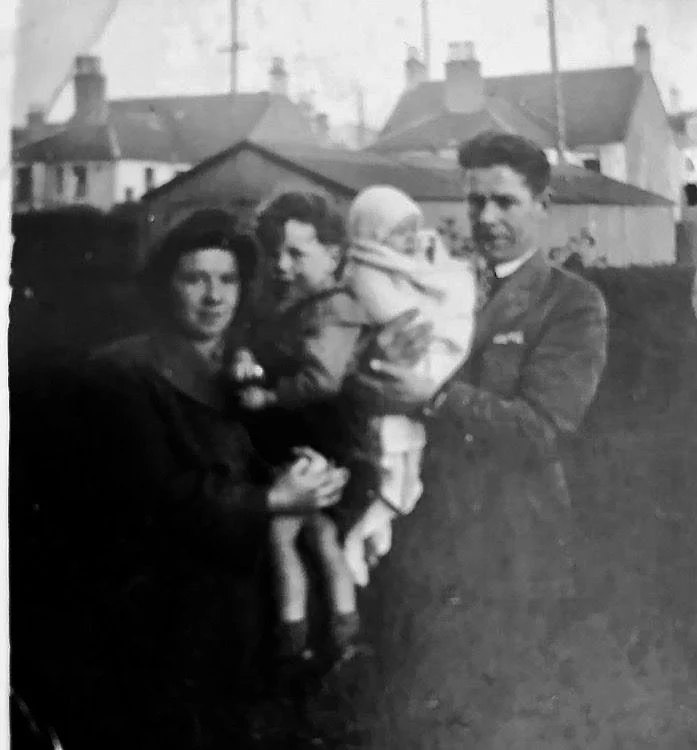
mum and dad with their two children, circa 1949.
I spent my early years in Thornton Avenue, Bonnybridge, living with mum, dad and my younger brother, Allister, born in 1949, at the home of my maternal grandfather, Patrick O'Hara. His wife, my maternal grand mother, died in childbirth in 1934. She was forty one years of age. The house was a substantial, four apartment semi detached affair, with a small front and a large back garden. It had a big bathroom and kitchen complete with a locally manufactured, Rayburn stove, used to heat the water, always on plentiful supply. The gardens were big enough for just about all our vegetable needs. Bonnybridge was a gritty industrial town, boasting a cigarette factory, a power station, a substantial brick work, a clay mine and at least three iron foundries.
During the first world war a policy of building quality council housing for members of the armed forces returning home at the conclusion of hostilities was instigated. The policy evolved from Part 3 of the 'Housing for the Working Classes Acts of 1890 and 1909'. Loans were made available to local Authorities across the country for the purpose. The policy became better known as 'Homes fit for Heroes', a term first used by Lloyd George, the then Prime Minister. My maternal grand mother and grandfather, who saw active service in Europe as a driver in the Royal Field Artillery, were allocated a, ‘Homes fit for Heroes’, at number 8 Thornton Avenue, Bonnybridge.
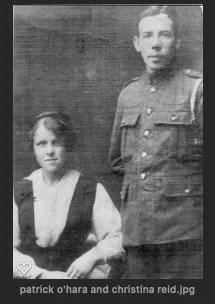
grandparents Patrick and Christine O’Hara
It stayed in the O'Hara family for an uninterrupted eight decades or so until the last of my uncles died in the 1990's.
A few years later dad changed jobs and we moved to live in Balloch, near Loch Lomond, living in a one bedroom apartment. It was very different from our ‘Homes fit for Heroes’ existence. It was so small that the bathroom and laundry washing facility were outside at the foot of the outside stairs, in a different building.
My brother and I would bathe together in a portable galvanised metal tub in the outside wash house. There was a large cast metal tub built into a brick surround in the washhouse. Getting hot water was achieved by filling the tub with cold water then setting a fire under the tub. It was a loving and safe life. My dad had been a Prisoner of war for nearly five years and saw a lot of cruelty and death. I think that was one of the reasons he appreciated a close, caring, family life.
Life has a way of disrupting ‘normality’ and things were about to change.
I was thirteen years of age when mum contracted cancer and had to undergo operations and a lengthy time in hospital. That was in the latter part of the 1950’s when medical procedures were perhaps not as highly developed, or, dare I say, as sophisticated, as today.
In any case, when mum was in hospital my brother and I had to move away from our family home, back to that ‘Homes fit for Heroes’ in Bonnybridge with my maternal grandfather and an uncle. Neither grandad or my parents owned a car, so visiting mum in the distant hospital was difficult. As it turned out, my brother and I never returned to live in Balloch.
That abrupt and unavoidable estrangement from my parents had a tremendous affect on me, although I did not recognise it then, being so young. When mum got out of hospital, dad got another job and moved to live in Bo’ness, West Lothian. My younger brother went to live with them and I remained in Bonnybridge. I did not express how I felt about that. I guess their thoughts were about my education and it would be better for me not to change schools. I felt abandoned and I gave up on education. A few months before my education at Denny High School was ‘legally’ about to end, I left, with no certificates and returned to live with my family in Bo’ness. I got a job, however I only had it about a year, when Dad moved again, this time to Musselburgh, meaning I had to leave my job. I did however gain employment when in Musselburgh.
Living back with my family after leaving school, only lasted about five years, before I moved out to find employment in a factory just north of London. After that I only paid fleeting visits back home.
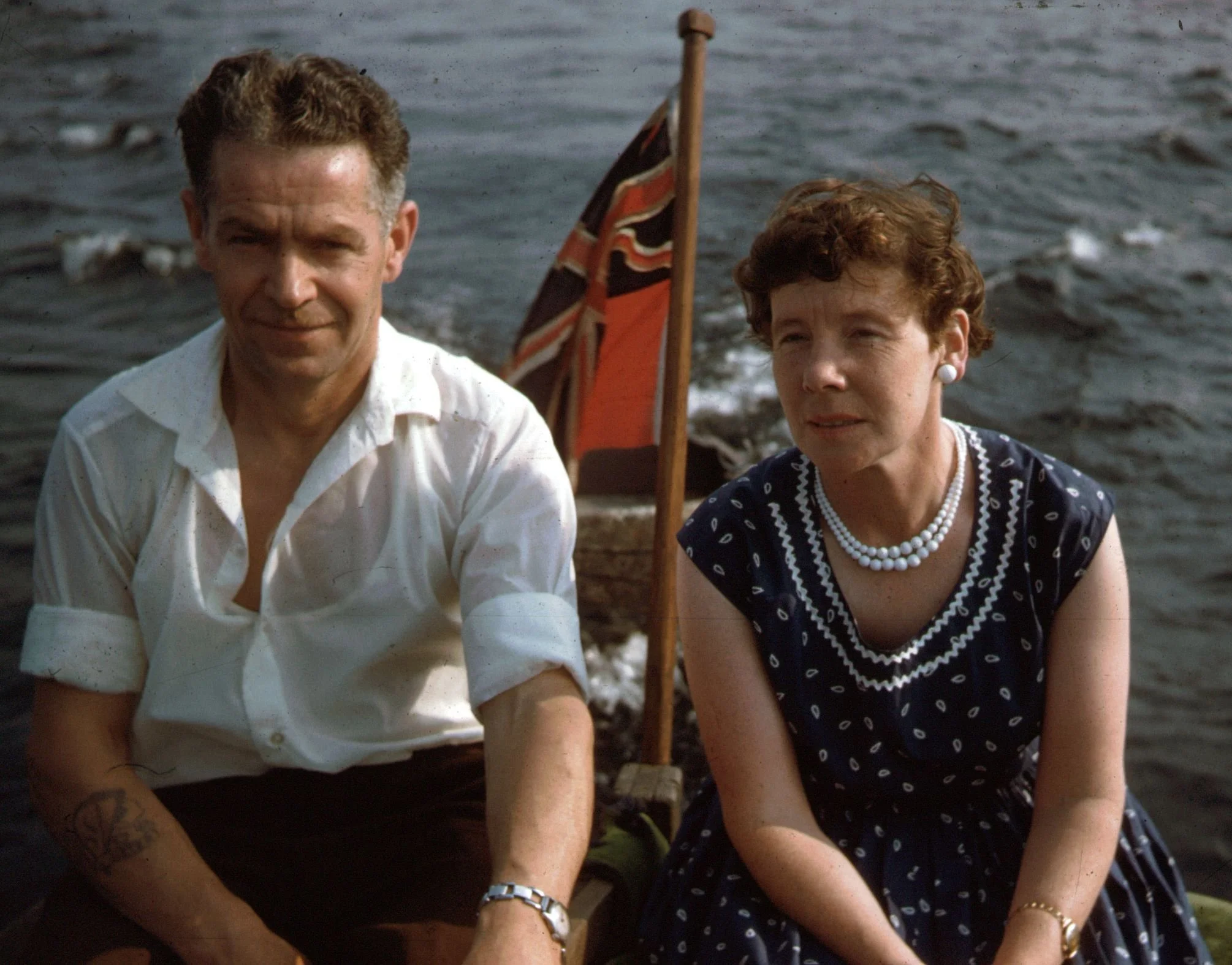
dad and mum at the tiller of The Seahawk on Loch Lomond
Mum died in 1973, aged 51 years and dad died the next year, aged 54 years.
I struggled to come to terms with their deaths. A few years ago, I tried to write something that might encapsulate my early life. I failed. I did however manage to scribble the following poem about my brother’s and my life back with grandad, and while it in no way covers all these days, I hope it gives you a flavour of the tiniest snippet of It;
Kipper Breakfast
An unbodied voice echoed
through the home for heroes,
‘You up yet’?
The call to breakfast
Floundering along Lino lobby
cramming feet into unlaced shoes
school bag bouncing behind,
wondering, where was my tie last?
Crumpled frayed collar atop
check flannel shirt, threadbare,
interrupting my glimpse of the Rayburn,
iconic symbol of local industry, iron cast
Grandad’s busy at the stove
still grime stained from
stoking the power plant furnace
after another long night shift.
You like kippers? Rhetorical,
no response expected, or given,
rebounded across fish perfumed kitchen.
Not an inquiry, more a fact.
Sit there he directs
swivelling from the range,
despatching fish laden platters
from a work scarred, yet gentle, fist
to my younger brother and me.
The ritual of breakfast at grandad’s
moves on, porridge the threat
if the kippers don’t last.